
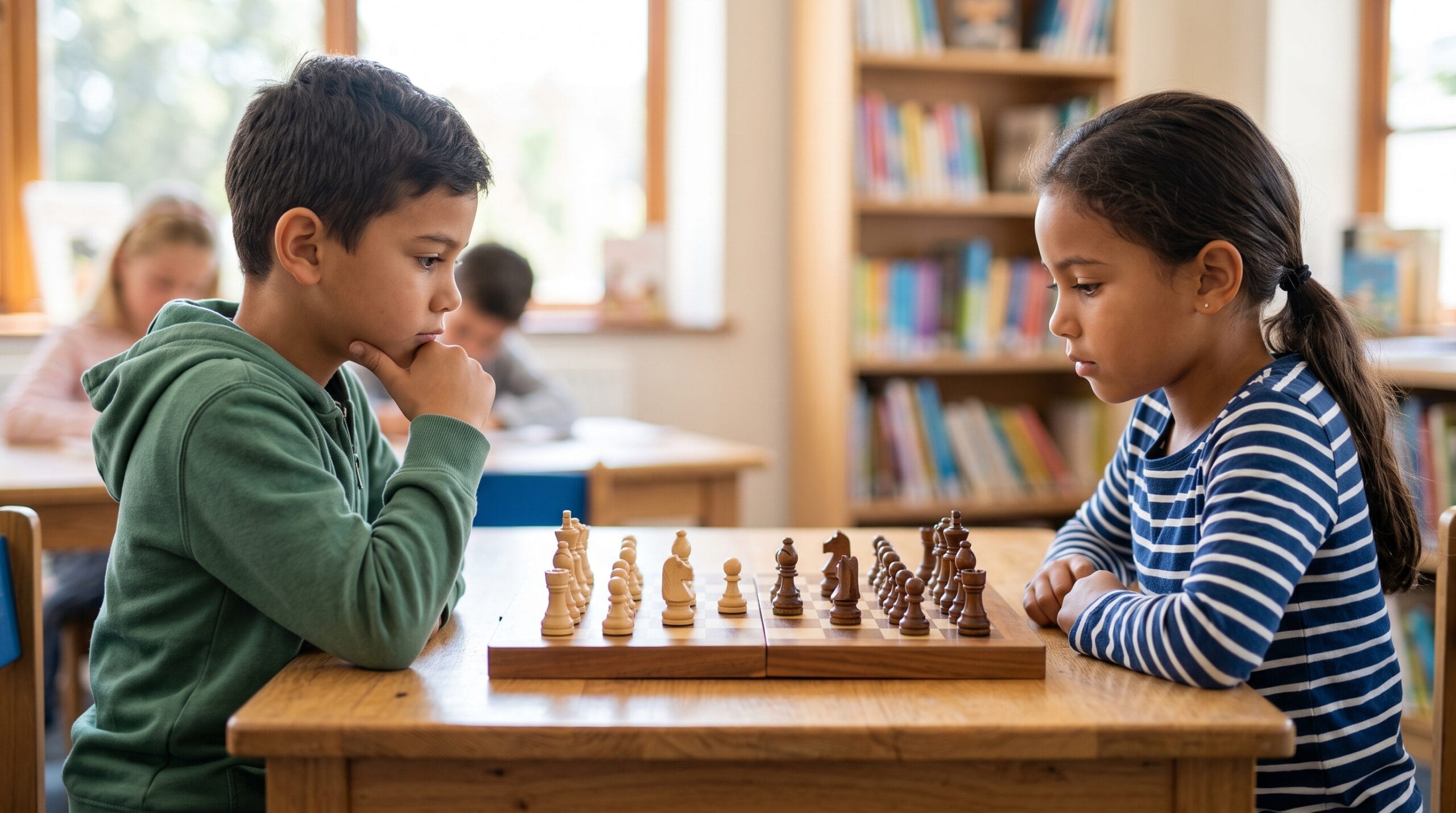
More Than a Game: How Learning Chess Can Benefit Children
When exploring the benefits of chess for kids, a chessboard looks simple: 64 squares, two players, and a set of pieces with clearly defined rules. But for a child, every position presents a small thinking challenge.
Should I move now or look again? What is my opponent threatening? What happens if I choose this move? What other possibilities have I missed?
That is one reason the benefits of chess for kids have attracted attention not only as a competitive game, but also as a learning activity.
At Ulamaify Chess Academy, we describe chess as “practice for life.” The goal is not to claim that chess magically makes children smarter. The value is more practical: chess repeatedly gives children opportunities to focus, plan, solve problems, control impulses, make decisions, experience mistakes, and try again.
A Key Benefit of Chess for Kids: A Reason to Slow Down
Children today are surrounded by experiences designed for speed: notifications, short videos, games with instant rewards, and information available almost immediately.
Chess works differently.
A move made too quickly can change the entire game. The board rewards children for stopping long enough to examine what is happening before acting.
That simple experience matters because self-regulation and executive-function skills are important parts of childhood development.
The Center on the Developing Child at Harvard University describes executive function as a collection of abilities that help people focus attention, manage information, make decisions, change strategies, and plan ahead. These abilities continue developing throughout childhood and adolescence and can be strengthened through opportunities for practice.
Chess naturally creates many such opportunities.
A child has to hold information in mind, ignore tempting but poor moves, consider alternatives, remember a plan, and sometimes abandon that plan when the position changes.
Chess Can Exercise Working Memory
Imagine a child examining a chess position.
They may be thinking:
“My knight is attacked. If I move it there, the bishop becomes open. But then my opponent could take this pawn. If that happens, I can respond with…”
Even a relatively simple position requires the child to keep several pieces of information active at the same time.
That is closely related to working memory—our ability to hold and work with information while performing a task.
A 2025 study published in Frontiers in Psychology compared 88 children aged five to six. Children who had participated in chess classes showed significantly higher visuospatial working-memory scores than children who did not attend chess classes. Because the research was cross-sectional, it cannot prove that chess alone caused the difference, but the researchers concluded that chess classes may be a useful activity for supporting visuospatial working memory.
That distinction is important when discussing the benefits of chess for kids. Good educational claims should say “may support” rather than promise outcomes that research has not established with certainty.
Chess Turns Problem-Solving Into Play
Many activities ask children to find the correct answer.
Chess asks something slightly different:
What is the best choice I can find from several possibilities?
There is often more than one reasonable move. Children learn to compare alternatives rather than simply search for a memorized answer.
Research into the benefits of chess for kids has found encouraging connections between chess instruction and problem-solving. A study involving students who received six months of chess instruction reported stronger improvements in metacognitive ability and mathematical problem-solving than a comparison group.
Metacognition means, in simple terms, thinking about your own thinking.
A child begins asking:
Why did I choose that move?
What did I overlook?
Was my plan working?
What should I examine differently next time?
Those questions may ultimately be more valuable than memorizing dozens of opening moves.
Chess Gives Mistakes Immediate Meaning
Children need environments where mistakes are useful rather than humiliating.
Chess provides unusually clear feedback.
If a child leaves a queen unprotected, the board quickly reveals the consequence. If a plan fails, the child can examine what happened. If a game is lost, another game can begin.
The lesson does not need to be, “I am bad at chess.”
With good coaching, it becomes:
“Something went wrong. Can I understand why?”
That shift encourages reflection rather than avoidance.
A study of 170 schoolchildren aged six to sixteen, published in The Spanish Journal of Psychology, reported improvements associated with chess participation in cognitive abilities, coping, problem-solving, and aspects of socio-emotional development compared with children participating in other extracurricular activities. The authors also noted that individual student characteristics influenced some of these effects.
When evaluating the benefits of chess for kids, the important lesson for parents is not that losing a chess game automatically creates resilience. It is that a well-taught chess environment can give children repeated, manageable opportunities to experience difficulty, receive feedback, adjust, and continue.
Chess Can Practice Self-Control
One of the most painful moments for a young chess player is seeing a move—and realizing one second after making it that something was missed.
Almost every player experiences it.
That is why one of the simplest habits in chess is also one of the most valuable:
Do not immediately play the first move you notice.
Look again.
At Ulamaify, our learning routine expresses this as:
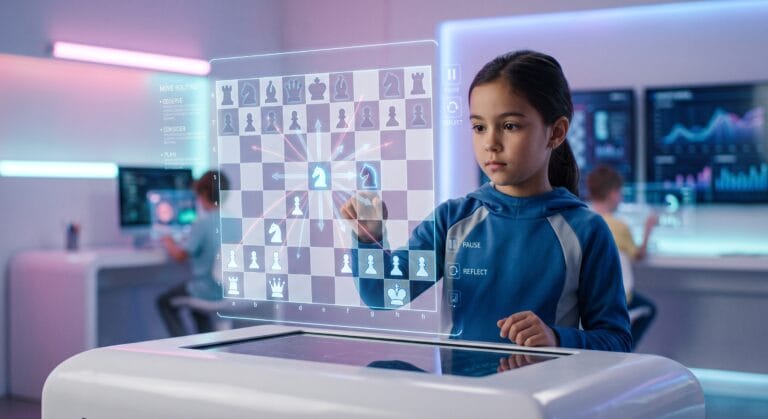
Pause → Observe → Consider → Plan → Move → Reflect.
The intention is not simply to slow children down at the chessboard. It is to make deliberate thinking into a repeatable habit.
The connection is especially interesting because inhibitory control—the ability to resist an immediate response when another response would be better—is one of the core components researchers associate with executive function.
Additional Benefits of Chess for Kids: Building Confidence
Confidence does not always come from winning.
A healthier form of confidence develops when children begin to recognize:
“I can work through something difficult.”
Chess provides hundreds of small opportunities for this.
A child solves a puzzle that initially looked impossible.
They remember a pattern from last week.
They find a defense without being told.
They explain why they chose a particular move.
They lose a game and discover what to do differently next time.
Progress becomes visible.
That is especially powerful when a teacher does not simply provide answers but asks children to explain what they see.
What About Chess and School Performance?
This is where responsible discussion is particularly important.
A meta-analysis examining chess instruction found promising average effects on mathematics, cognitive ability, and smaller effects on literacy, but researchers also warned that many studies had methodological limitations and that transfer from chess to unrelated academic abilities should not be assumed.
A large randomized controlled trial funded by the Education Endowment Foundation involved 100 schools and more than 4,000 pupils in England. Children received approximately 30 hours of chess instruction. One year after the intervention, researchers found no evidence of higher standardized mathematics, reading, or science scores compared with the control group.
That finding does not mean chess has no educational value.
It tells us something more useful:
Parents should focus on the real benefits of chess for kids—what children actually practice while playing—rather than exaggerated promises about IQ or guaranteed school grades.
Chess directly asks children to concentrate, calculate, anticipate, compare alternatives, remember information, recognize patterns, explain ideas, manage mistakes, and make decisions.
Those are meaningful learning experiences, proving that the benefits of chess for kids extend far beyond a school examination.
Why the Right Chess Academy and Teacher Matters
There is an important difference between simply giving a child access to a chess app and teaching that child how to think through chess.
A computer can tell a student that a move was wrong.
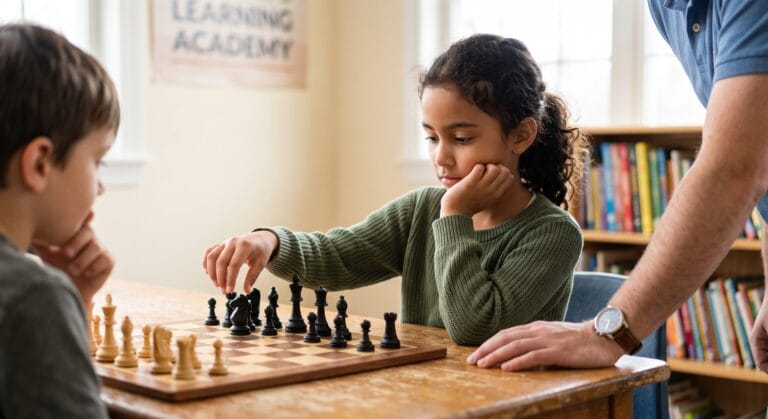
A thoughtful teacher can ask:
“What were you thinking here?”
“What did your opponent want?”
“What else could you have considered?”
“What could you do differently next time?”
That conversation transforms a mistake into a learning process.
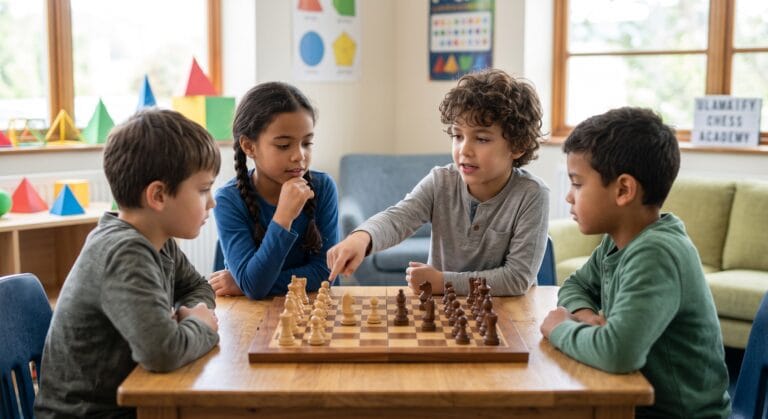
At Ulamaify Chess Academy, classes are live and limited to no more than four students, allowing the coach to notice how individual children approach positions, respond to mistakes, and explain their ideas. Children solve, choose, explain, play, and reflect rather than simply watch a prerecorded lesson.
The Real Benefit May Be the Habit Behind the Move
When looking at the benefits of chess for kids, parents do not need the game to promise miracles for it to be valuable.
Its strength may lie in something much simpler.
Before every move, a child gets another chance to practice:
Look carefully.
Think before acting.
Consider another possibility.
Make a decision.
See what happened.
Learn from it.
Then do it again.
Thousands of thoughtful moves later, a child has spent a great deal of time practicing how to think.
And that is a worthwhile reason to learn chess.
Research and Further Reading
Center on the Developing Child at Harvard University — A Guide to Executive Function
Sala, Foley & Gobet — The Effects of Chess Instruction on Pupils’ Cognitive and Academic Skills
Education Endowment Foundation — Chess in Primary Schools Trial
Learn about Ulamaify Chess Academy:
What are the main benefits of chess for kids?
Chess gives children repeated opportunities to practice attention, planning, problem-solving, working memory, decision-making, and reflection. At Ulamaify, these skills are reinforced through live coaching rather than simply expecting children to develop them by playing on their own.
How does Ulamaify help children think more carefully during chess?
Ulamaify uses a simple thinking routine:
Pause → Observe → Consider → Plan → Move → Reflect.
Coaches encourage students to slow down, examine the position, compare possibilities, think about consequences, make a choice, and then learn from what happened.
How does Ulamaify turn chess mistakes into learning opportunities?
Instead of simply telling a child that a move was wrong, an Ulamaify coach may ask what the student was thinking, what they overlooked, and what they could check next time.
This helps children treat mistakes as information they can use to improve.
Can chess help build a child’s confidence?
Chess can give children small, visible experiences of progress—solving a difficult puzzle, finding a move independently, explaining an idea, or recovering after a mistake.
At Ulamaify, coaches encourage children to recognize this progress rather than measuring confidence only by winning games.
Does Ulamaify claim chess improves IQ or guarantees better school performance?
Ulamaify follows a research-without-the-hype approach. We focus on what children directly practice through thoughtful chess instruction: concentrating, comparing alternatives, planning, explaining ideas, making decisions, and reflecting on mistakes.
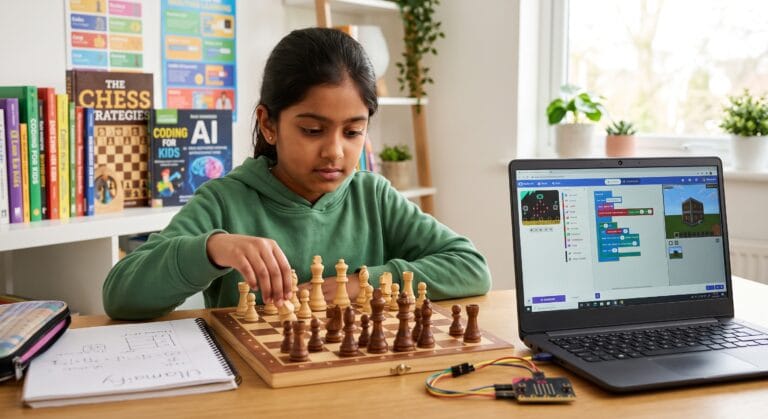
Add your first comment to this post